What is props?
https://mrobeidat.github.io/reading-notes/
What is props?
props are used to pass data from a parent component to a child component in React and they are the main mechanism for component communication
What are component lifecycle events?
What are component lifecycle events? React lets you define components as classes or functions. The methods that you are able to use on these are called lifecycle events. These methods can be called during the lifecycle of a component, and they allow you to update the UI and application states.
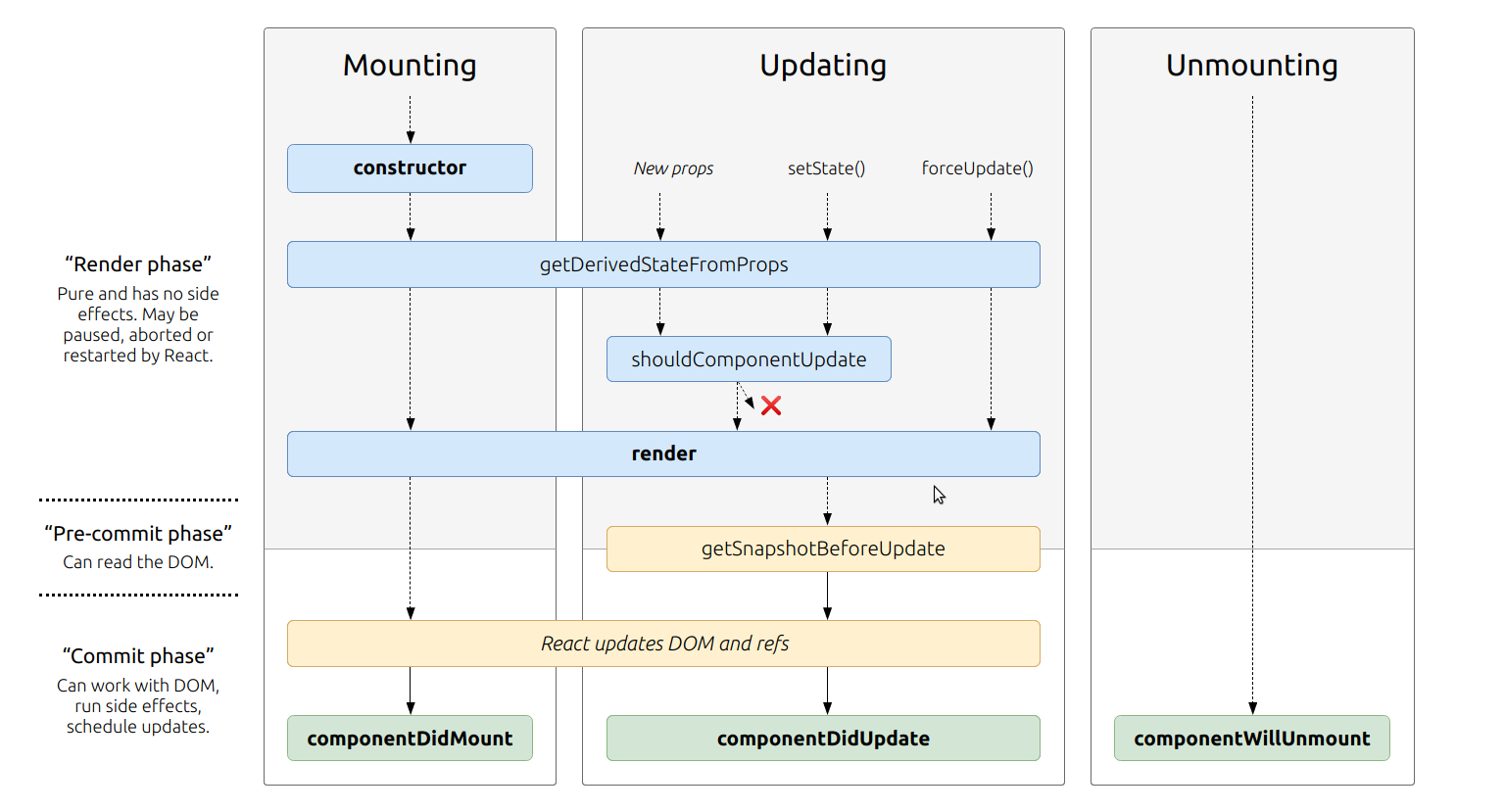
Mounting, Updating, and Unmounting are the three phases of the component lifecycle:
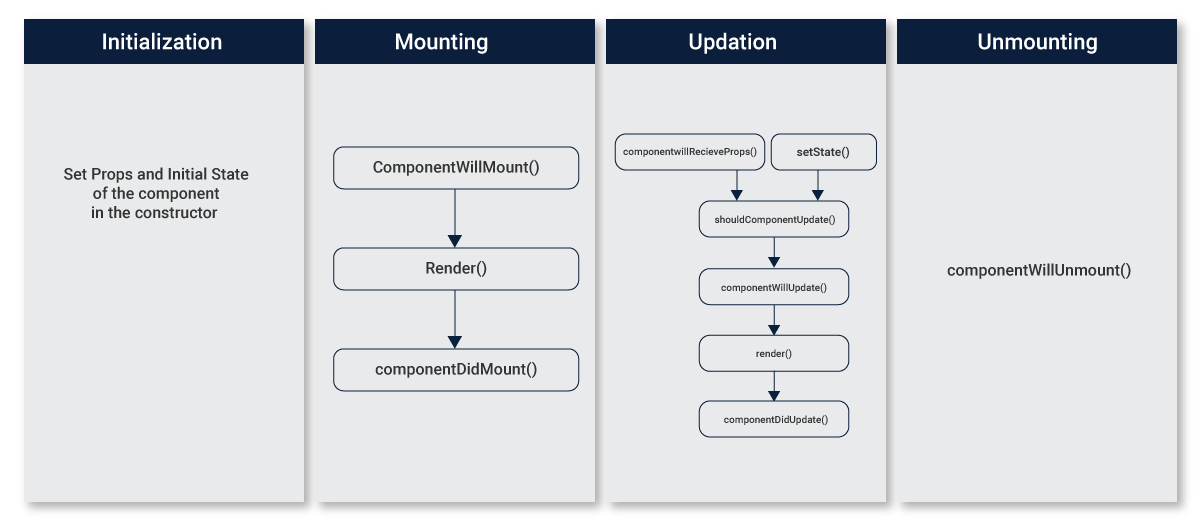
Initialization :
This is the first stage in the React.js lifecycle and is essential to understand and explore thoroughly. This is the stage where the component is constructed with the provided properties and a default state.
Mounting :
This is the next stage in the lifecycle and a critical one for launch. After you have prepared the code with basic requirements, states and props, you need your component to mount in the browser.
Updating :
The third stage starts when the component has been adopted on the browser. This can then grow by receiving new updates from the program. The user can interact with the program and the component can be updated accordingly.
Unmounting :
The final stage of unmounting is essential as it doesn’t require the component and gets unmounted from the DOM. As the final state, it is designed to produce the outcome via unmounting.
Users can also experiment with the app and find that it works (as programmed) every time. This is because React.js developers adhere to the lifecycle protocol and create a uniquely functional app for them.
Whether that be an online calculator or a reference guide for a library, the UI will react to the command accurately as it follows the lifecycle through.
What React.js Is Used For?
React.js is a JavaScript library that can be used to design engaging user interfaces. The core technology behind React.js allows users to interact with online experiences seamlessly. There is no updating code or new features being integrated via the cloud. The processing is done on the spot and there is low latency to the final computation. This can be used to design a weather app, a simple logging system, or even some of the more complex ticket-booking apps that are seen online.
Challenges With React.js
The only challenge that is significant enough deals with the UI and MVC framework. Sometimes, updates take longer than expected and there is limited documentation available. That’s where the React.js community comes in and provides greater insight into the domain. It can also create a more robust library wherein coders can add or subtract. They can leverage the technology to fit their own unique needs from the coding schema.